
By Pastor Cassian Ngotho Mwachanya
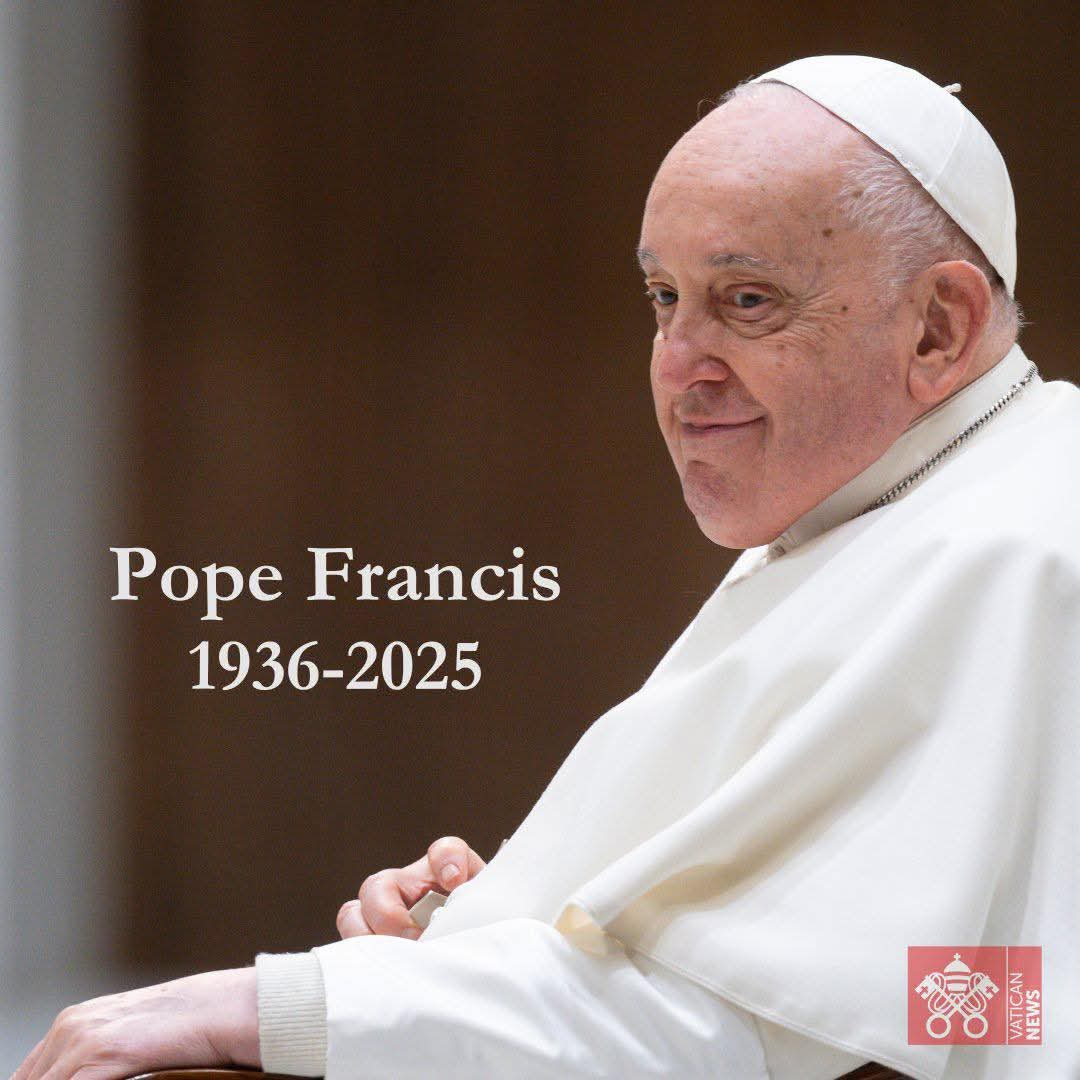
Pope Francis, who passed on early Easter Monday, April 21, was an influential Roman Catholic leader of our time. Raised from humble beginnings in Argentina, he rose to global prominence after his election in 2013. His life and papacy were marked by compassion, intellectual depth, philanthropy, and a relentless campaign against injustice, poverty, and war.
From his early years, Pope Francis demonstrated a profound commitment to serving others, particularly the poor and marginalized. His background in Argentina, a country marked by economic challenges, may have shaped his worldview. He consistently spoke out against corruption, extrajudicial killings, abductions, and human trafficking. He championed the rights of the poor and advocated for peace in war-torn regions such as the Democratic Republic of Congo, Sudan, and areas affected by extremist groups like Hezbollah.
His efforts to promote justice were a defining aspect of his papacy, and he provided a moral voice at a time when many world leaders seemed indifferent to human suffering. However, as a Pentecostal pastor and fellow laborer in God’s vineyard, I believe it’s necessary to reflect both humbly and truthfully on his legacy.
While we celebrate his boldness and humility, we must also acknowledge where his approach may have left serious questions, especially from a Sola Scriptura (Scripture alone) perspective—where the Bible remains the ultimate and unchanging authority on matters of faith and doctrine. A particularly controversial stance was his position on same-sex relationships.
While the Pope did not support gay marriage per se, he did advocate for civil unions and famously said, “Who am I to judge?” when asked about homosexual Christians. While many saw this as a gesture of inclusivity, it caused confusion in the Church because the Scriptures are clear on the issue. Romans 1:26–27 and 1 Corinthians 6:9–10 call homosexual acts sinful, though never instruct us to hate or shun the individuals involved.
His statement gave the impression of neutrality or quiet acceptance, which left many clergy and believers alike in silent struggle. Should we affirm love and truth at the same time? Can silence be misinterpreted as consent? These are questions that have lingered in many hearts.
Another challenging issue is the Church’s position on celibacy. Pope Francis often acknowledged the importance of sex in marriage but did not create room for priests to marry officially. As a result, many priests who could not sustain celibacy ended up in secret relationships—some even fathering children, a contradiction to the vows they had made.
There are documented cases where priests, choosing honesty over hypocrisy, opted to marry and were swiftly excommunicated. Ironically, those who remained in ministry while engaging in hidden affairs were quietly tolerated. In some instances, these affairs involved married women, making the situation even more devastating.
Some priests have even lost their lives after being confronted by angry husbands. This sad reality underscores the need for reform. The Bible in 1 Corinthians 7:9 says, “It is better to marry than to burn with passion.” While celibacy is a noble calling, it is not for everyone. Hebrews 13:4 also reminds us that “marriage is honorable in all.”
We must ask—why preserve the appearance of purity while hiding so much pain and scandal beneath? If the Pope could refrain from judging individuals with unbiblical sexual orientations seeking Christian fellowship, then why judge and exclude priests who wish to honorably marry? This contradiction has caused disillusionment among clergy and congregants alike.
As we honor Pope Francis, we remember his courage, intellect, and humanitarian impact. But we also pray that his successor will bring clarity where there was ambiguity and uphold Scripture as the ultimate guide for life and ministry.
It is said that the eulogies of prominent figures are often written long before they pass—carefully curated to present the best. But for those left behind, truth must never be sacrificed for praise. As more voices arise in this generation to confront evil and uphold righteousness, may we remember that truth spoken in love is never rebellion—it is obedience to God.
For those of us who stand on Sola Scriptura, the authority of God’s Word must always outweigh the traditions or opinions of men, however noble they may seem. May the legacy of Pope Francis challenge us all to pursue holiness, uphold truth, and reform where there has been compromise.
Shalom.
more recommended stories
 LOVE STOPPED !!
I would cheer on Mwamburi as.
 POLYGAMY, CHRISTIANITY AND MODERNITY: HOW AFRICA’S SOCIAL ORDER WAS DISRUPTED
For generations, African societies were governed.
 WOMEN DON’T GET CAUGHT CHEATING LESS THAN MEN BECAUSE THEY’RE SMARTER OR MORE LOYAL …✍🏽
They get caught less because.
 WHEN FATHERHOOD BECOMES OPTIONAL: CALLING OUT THE IMMATURITY OF “DEADBEAT” PARENTING
In communities around the world,.
 WANAWAKE SIO NGOMA ZA KUPIGWA!
Ni jambo la kusikitisha kwamba.
 WHEN THE ROD BECOMES THE GUIDE: RETHINKING DISCIPLINE IN A CHANGING WORLD
By Pastor Cassian Ngotho Mwachanya.
 7 REASONS WHY MEN WILL ALWAYS ASK YOU FOR SEX
Its a bit long but.
 OUR PERSPECTIVES SHAPE OUR DESTINIES !
I LOVE YOU SO MUCH.
 IF LOOKS COULD KILL, MY RAPIST WOULD BE DEAD
It’s been months since my.
 JOYCE LAY SPEAKS OUT ON MARRIAGE ISSUES AFTER HUSBAND BILL LAY’S HEART ATTACK
By Winnie Mabel Former Taita Taveta.
 PRESIDENT RUTO AND THE LGBTQ RULING QUESTION
The 27th February, 2023 controversial Supreme.
 KENYA’S SUPREME COURT HAS APPROVED LGBTQ ORGANIZATIONS IN KENYA
This is a huge win for.
 MY EX WIFE DENIED ME MY CONJUGAL RIGHTS
Denying a man sex is a.
 GETTING PREGNANT WITH HIV
By Miriyam Binti Eddy Many ladies.
 A CHEATER IS BORN CHEATER SAYS JOYCE LAY
Former Taita Taveta woman representative Joyce.
 AN OPEN LETTER TO JOYCE WANJALAH LAY
Dear Joyce Wanjalah Lay, I.
Leave a Comment