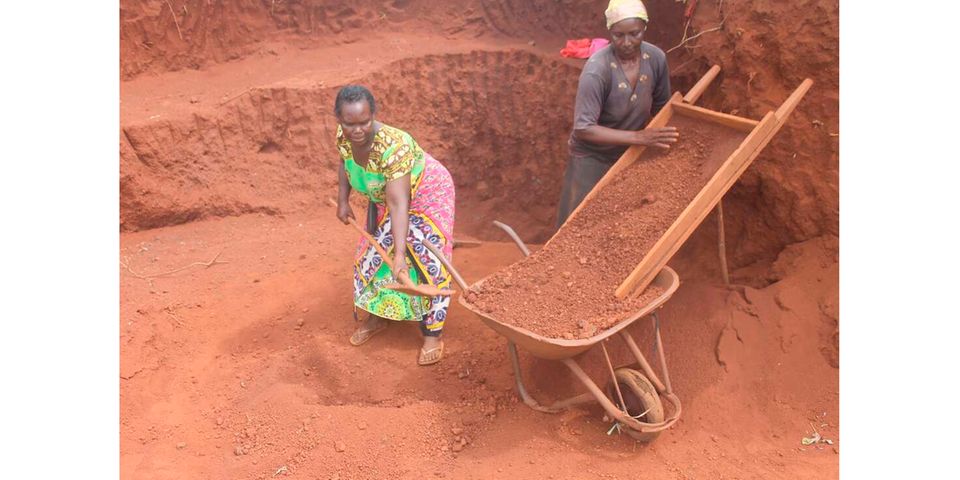
Some of the women at Mbudzi village in Jaribu, Kilifi County mining the Iron Ore mineral in order to feed and educate their families. Locals have accused iron ore miner brokers for high poverty rate in the area.

By Lucy Mkanyika
A recent survey by Oxfam, shows that women comprise only 15 per cent of the 10,000 ASM workforce in the county.
Situated along the Mozambique Belt, Taita Taveta is endowed with high and middle-value gemstone vast variety including ruby, Tsavorite (green garnets), red garnets, sapphire, tourmalines and rhodolites among others.
However, residents, especially women and children do not benefit from the vast resource.
A majority of women in gemstone mining areas mainly work as casual labourers and are often vulnerable to gender discrimination, exploitation and health issues.
In Kasigau, for example, an investor, in 2016, subjected her female workers to indecent searches to prevent them from stealing her gemstones.
Every evening, more than 50 female workers drawn from the local village, underwent the humiliating act.
A victim tells nation.africa that the investor would first threaten them with a gun before parading them naked to search for her precious stones from them. In some instances, those who refused to comply were assaulted and threatened not to report to authorities.
“We decided to leave the job because we were not being paid and also the working condition was not favourable. She used to cook our food in a rusty metal drum,” the victim says.
She says their quest for justice was cut short after the perpetrator threatened and harassed them to withdraw a case they had filed at a Voi court.
She disclosed that the investor gave some victims Sh3,000 before promising them more goodies once the court acquitted her.
To work in the mines, some women have to buy their entry through a sexual transaction.
Many women who have spoken to nation.africa resonate with their colleague’s personal experiences.
Ms Esther Wanjala says the lack of proper security at the mining zones hinders women from venturing into mining activities.
“Sometimes, women are forced to give in to their (men) advances to get favours like gemstone buyers, jobs and excavation tools,” she says.
A report released by the Kenya National Commission on Human Rights (KNCHR) in 2018, says locals, especially women and children in the county, face human rights violations in the mining sites.
The report further notes that residents have not benefited from the resource due to infringement of gender, land, environmental, labour and children rights.
To tap into the potential of the sector, a programme dubbed Fair for All: Improving value chains at scale has been launched in the county.
Implemented by Transparency International Kenya in partnership with the Kenya Land Alliance (KLA) with financial support from Oxfam in Kenya (OiK), the program also targets miners in Turkana and Kwale counties, where there is gold and mineral sands respectively.
Oxfam Programmes Director Blandina Bobson, says many women work in artisanal and small-scale mining but with little support from government.
Ms Bobson states that there is a need to integrate gender equity and equality principles into the sector to boost the skills of women artisanal miners, challenge gender discrimination, sensitise them on existing laws to alleviate some of the barriers that hinder their participation in mining.
“Women working in mining sites should be treated in a dignified manner, paid accordingly, and given the right working gear,” she says.
Concerning land rights, gender disparity in land ownership in the county is a key concern, with women getting less than two per cent of the title deeds issued between 2013 and 2017 compared to 97 per cent of men.
Ms Bobson says the patriarchal cultural perceptions disadvantages women as they do not benefit from land compensation, which in most cases is provided to men.
Kenya Lands Alliance Executive Director Faith Alubbe, notes that some of the mines have been grabbed by wealthy and influential investors, who are out to mint the resources at the expense of the locals.
Ms Alubbe says the five-year programme will ensure locals get their fair share of benefits as enshrined in the Constitution.
“Some are even grabbing land in this county as the government watches. There is no need to have good laws that are not benefitting the locals,” she said.
She says mining companies must ensure residents get their fair share of benefits and give their workers appropriate salaries and working gear.

 THE GOVERNOR DISCOVERS FISCAL DISCIPLINE — FOUR YEARS TOO LATE?
Perhaps one of the most.
 SHAKAHOLA: 200 YEARS FOR MACKENZIE, BUT WHO WILL ANSWER FOR THE STATE’S FAILURE?
Kwaela News Network | Editorial.
 WHO IS THIS GOVERNOR TAITA-TAVETA COUNTY IS LOOKING FOR BEYOND 2027?
As the 2027 General Election.
 COURT HALTS COAST WATER DISCONNECTIONS AS EJF CHALLENGES SH6 BILLION DEBT CLAIM
Kwale, 29 August 2026 —.
 THE LEGENDARY 70-YEAR-OLD MZIMA PIPELINE LIVES TO BURST ANOTHER DAY
Government Celebrates Repairing What It Failed.
 TRAGIC LOSS OF JOHN KALAGHE JOSHUA LEAVES FAMILY AND COMMUNITY IN MOURNING
It is with profound sorrow and.
 THE NAIROBI–MOMBASA EXPRESSWAY: A DECADE OF PROMISES, YET NO HIGHWAY IN SIGHT
The Highway That Exists Only.
 FROM FUEL TO DRINKING WATER: HOW A BILLION-SHILLING PIPELINE DREAM RAN AGROUND
A Lesson in Why Politics Should.
 LIKONI BRIDGE: WHAT HAPPENED TO RUTO’S KSH 100 BILLION PROMISE?
For years, residents of Mombasa and.
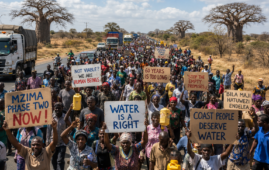 MZIMA PHASE TWO: SIX DECADES OF PROMISES, DELAYS AND GOVERNMENT FAILURE
Coast Residents Continue to Suffer as.
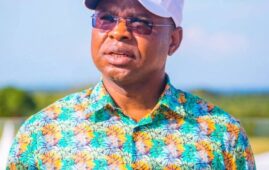 ABSENT LEADERSHIP OR CALCULATED DISRESPECT? QUESTIONS MOUNT OVER KINGI’S NO-SHOW AT MGANGE NYIKA FUNDRAISER.
Serious questions are emerging following the.
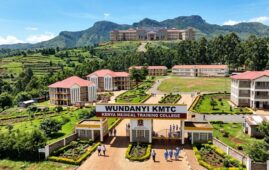 ATHANAS MBELE’S “BIG 7 AGENDA” VISION POSITIONS WUNDANYI FOR TRANSFORMATIONAL GROWTH
Wundanyi is emerging at the center.
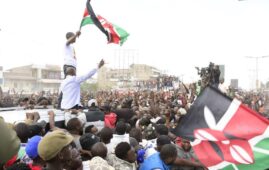 POLITICS ON OVERDRIVE
Kenya is not a permanent.
 WHY TAITA TAVETA NEEDS ITS OWN POLITICAL VEHICLE
By Geoffrey Kimonge (GK) The Case.
 HAS GREED CONSUMED THE TAITA TAVETA COUNTY ASSEMBLY?
By Geoffrey Kimonge (GK) Has the.
 THE COLLAPSE OF PAA: AMASON KINGI’S POLITICAL HOLLOWING EXPOSED IN MAGARINI AND TAITA TAVETA
By any political measure, Pamoja.
Leave a Comment