
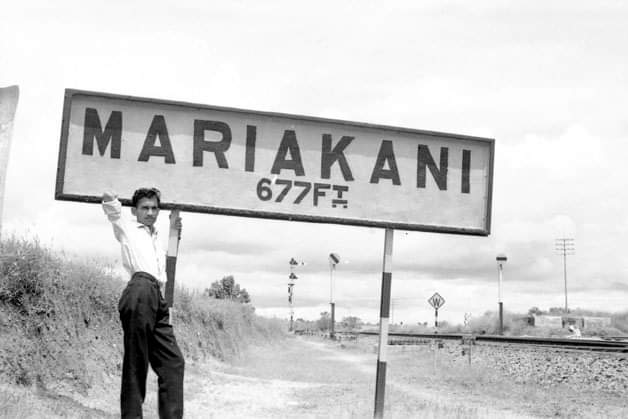
Mariakani, was a route to the coast during the long distance trade. The town derives its modern name from the spot where long distance traders would leave their bows and arrows before entering Mombasa.
The Sultan had banned traders from entering the town with any weapons. One theory suggests that the ban was the result of several fatal brawls between Kamba traders and coastal residents.
The place, thus, became known as Riaka, the Mijikenda (sic Duruma) name for a single quiver, or Mariaka, its plural form. The Giriama and the Kamba word for quiver is Thyaka (singular). They called the place ‘“Mathyakani”. Mariakani thus translates directly to “the place of Quivers” in the Duruma language.
Travellers to and from coast through that trade route would say they were going to “Mariakani” to drop off or collect their weapons.
They needed the weapons along the route to fight off bandits, maintain discipline within their own ranks, and protect themselves from wild animals, such as the lions of Tsavo.
A leather quiver that was common among the traders can be found at the Kenya National Archives.
To celebrate and commemorate the history of Mariakani, a model quiver needs to be built in the town. The political leadership of the town in collaboration with Kilifi County Government need to take this up. I believe that Mombasa Cement or Mabati Rolling Mills would gladly build a monument with a big quiver showing long distance traders leaving their weapons and others approaching the quiver. It would be icon.
VIVA MARIAKANI!


more recommended stories
 TAITA TAVETA COUNTY GOVERNMENT’S SHAME ON DISPLAY
When a county’s Chief Executive.
 GODOMA TITLE DEEDS: A HISTORIC MILESTONE MARRED BY QUESTIONS OVER ACCURACY
GODOMA – BURA, TAITA TAVETA, Residents.
 QUESTIONS MOUNT OVER APPOINTMENT OF NEW COUNTY INSPECTORATE DIRECTOR IN TAITA TAVETA
A cloud of uncertainty is.
 FROM COUNTY HALL TO PPCK: GRANTON SAMBOJA’S LEADERSHIP RECORD FACES RENEWED SCRUTINY
Former Taita Taveta Governor Granton Samboja.
 WHO IS JUSTICE AMRAPHAEL MBOGHOLI MSAGHA? THE TAITA SON WHO ROSE TO THE SUMMIT OF KENYA’S JUDICIARY
In the hills of Taita Taveta.
 Decisive Leadership, Not Polite Governance, Is What Taita Taveta Needs
By all accounts, leadership is not.
 MWANGEKA WA MALOWA
Kufuma konkala Wadawida ndewerekoghe na.
 TAITA TAVETA LANDS CECM MOVES TO COURT OVER SALARY ARREARS AND REMOVAL DISPUTE
MOMBASA, KENYA — Taita Taveta.
 MRAMBA COMMUNITY LAND: COMMUNITY DEMANDS SWIFT REGISTRATION AS LEGAL AND GOVERNANCE DISPUTES CONTINUE
Residents of the eight communities that.
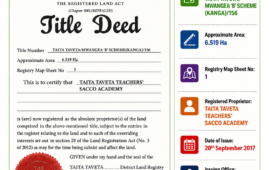 WHOSE LAND? WHOSE MONEY?
Members Demand Answers Over Qwetu Sacco’s.
 Analysis of the Auditor-General’s Findings on the County Executive of Taita Taveta (FY 2024/2025)
The Auditor-General issued a Qualified Opinion,.
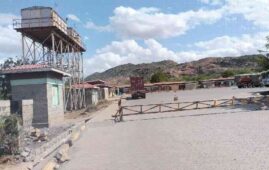 SH320 MILLION, SH8,000 A DAY: THE COSTLY FAILURE OF MAUNGU LORRY PARK
The story of Maungu Lorry.
 EACC REPORT EXPOSES IRREGULAR SPENDING AND PROCUREMENT VIOLATIONS AT TAITA TAVETA COUNTY ASSEMBLY
Voi, Kenya – The latest quarterly.
 EXPOSÉ | WATER PAID, SERVICE DENIED
Inside the payment breakdown linking TAVEVO.
 50 YEARS OF DRY TAPS: THE SHAME OF MWASOKO WATER PROJECT
How a 1975 Government Water Scheme.
 KSH 500 MILLION IN QUESTION: AUDIT EXPOSES DEEP FINANCIAL CRACKS AT TAVEVO
By Kwaela News Network Investigations Desk.
Good article